Showing posts with label math. Show all posts

Saturday, August 5, 2017

How to handle the way beyond groups in your classroom?


       Meet Justin....
     When he was going into 3rd grade the teacher commented, "I am nervous to have Justin in class next year. He is so smart and what do I do when he asks me something I don't know?" 

    I remember being a bit taken aback. Don't remember my exact response. What I didn't realize at the time was how many teachers feel that exact way.  Academically advanced students make them nervous.  My hope is that this post will give you strategies to strengthen your resolve to teaching this students with the same vigor we give those who struggle.


   As a society, we buy into the myth that students who are academically gifted don't need additional help because they are beyond proficient. They pick up the content as presented usually quickly or on thier own. So, we are not worried about them.
   Did you know that they are the #1 subgroup that are underperforming?? Why don't we consider this as an issue? ANSWER: When these students underperform they are still proficient in most cases. If you asked the child above if school was difficult he will say, "No." If you asked him if he learned how to learn, he'd say, "No."  What is our job? To make sure all are proficient or teach students how to learn, so when we are not there to feed it to them they can still learn.

LETS GET TO TEACHING ALL STUDENTS TO NOT UNDERPERFORM!!

 
First off, realize whether or not your para or other support staff who teach guided reading have the questioning and out of the box thinking needed to truly push your highest students. If they can...GO FOR IT, give them the group.  If not, give them the on level group. Following the questions provided will be perfectly fine for this group.  Your high or beyond group needs your expert question skills and ability to take what is stated by students to dig deeper, to think. 
Number 2 clipart


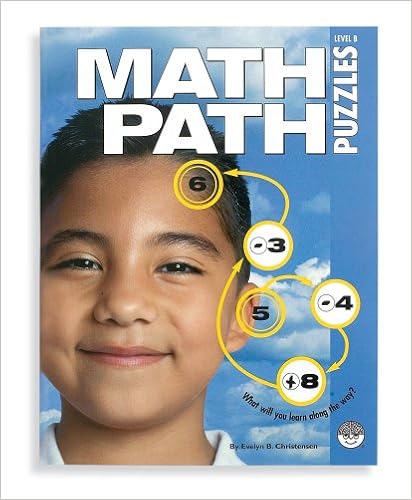
When they are done, what do you have them do? More? Is the more better, deeper or just more of the same?  Below are some books that I have found to be very useful in creating depth of knowledge. I have the students work through a section as a small group or as partners. They need your guidance as you check in regularly. I also find ways to engage them in book clubs so that they are reading for the pure love of reading and discussing. Some items below may challenge some of their thinking. These are a sampling of what could work. Basically, take time to find something that works for your students.

Math:
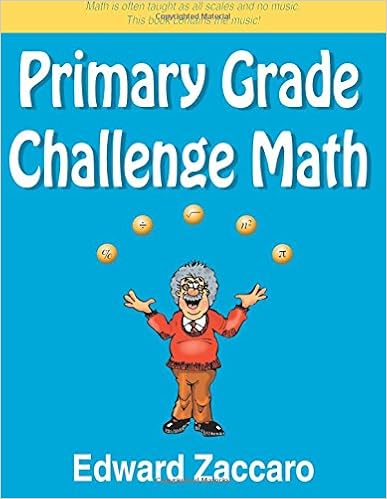
                                                                                   
                                            
Reading:


Image result for number 3
I don't like to give them just MORE paper to do.  So, I mix the above with games.  
   * Dice games - see my post on Dot Cube Games for ideas.
   * You can look for games on your favorite website then check a couple grade levels above.
   * There are many books and resources for reading games. 
                                        *You can also use any game board and task cards.  This is nice because if they know the game rules already it takes less time to get started.  All you have done is changed the questions to level appropriate.
 

*Hands-On Equations is a set of manipulatives that keep students engaged as they experience algebra in a physical manner.  This is simply deepening their knowledge of algebra.


*The other "game" I find easy to differentiate and stretch the students who need a challenge is what I call "Treasure Hunt." Instead of playing "Scoot" with cards where everyone is using the same cards and given a set time limit, students wonder the room looking for the numbers or color that they have on thier page.  This way, I can increase the difficulty for those who need it.

The following are various YouTube videos you may find interesting.

Listen to what the kids are saying:


Behavioral side:

6 tips for classroom teachers:

One of my all time favorites...It demonstrates just how varied students are.


Another classroom teachers thoughts:


These are just a few examples. I do hope it entices you to look a bit at your classroom and how are you ensuring that ALL students are being challenged to move from where we recieve them at the start of the year to their potential.  
Kim

Monday, July 3, 2017

Dot Cubes Games


Rollin', rollin', rollin' get them dice a rollin'... (Sung to the tune of the theme of Rawhide)
Hi, my name is Kim Remmers and I have an dice addiction!
As you can see, I have a few.

How many people have played Tenzi? (Raising hands won't help here. But a shout out in the comments would.) It is a simple yet engaging game.  While at The Nebraska Association for Gifted (NAG) conference several years ago I learned about it.  Now, we play it in my classroom every so often to practice vocabulary, fact practice, concept review.... As soon as the students see me pull out the box (pictured in the left hand corner of the picture above), they immediately get excited.
Image result for tenziImage result for 77 ways to use TenziImage result for 77 ways to use Tenzi

I have to confess here, I have bought a couple sets of actually Tenzi die and I have the 77 Ways to Play Tenzi card set.  I love the ideas they spark! However, I am a poor teacher and pastor's wife who wanted 30 sets.  I did find somewhere on the vast internet where I could buy die in bulk.  I wish I could remember where I found them. Sorry! Racked the brain and no such luck. I always have enough for each student to have their own.

THE BASICS: 

Basically, to play the game you roll all ten die and look for a specific number or combination of numbers.  As you find them, you put them to the side.  In the 77 Ways to Play Tenzi, you can find various ways to stack, place, or form pictures with the die. I will share some ideas here later. Once you have all the die with a particular number or pattern, then you shout out, "TENZI!"

WAYS TO PLACE THE DIE:

1. Boneyard pile - simply shoved to the side.
2. Tower - stack one on top of the other.  If they fall, you start over.
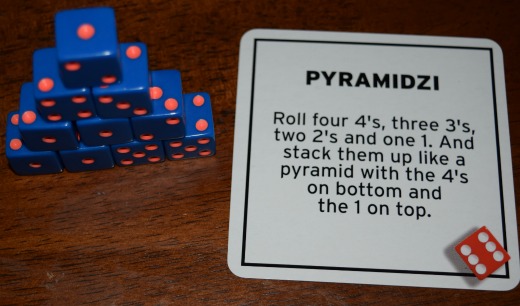
3. Pyramid - four on the bottom, 3 next level up, 2 die then finally 1 at the top (I have seen where the number of dots matched the level.)
4. Assending or Desending - start with 1 and 6. (only need 6 die)
5. Double Trouble - two sets of die
        *pattern: alternating pattern (AB or AABB or AAB)
        *larger pyramid or tower
6. Picture patterns: 77 Ways to Play Tenzi (They are not paying me, I just feel they should get credit.) contains cards that have a pattern in which to place the die. The students could make their own.

QUICK START IDEAS FOR THE CLASSROOM:

1. Vocabulary practice - Rote disguised as fun! Everyone looks for a particular number, lets say 2s.  As they find a two they say the word and definition.  Guess what they have said it about 10 times by the end. Next word, new number.

2. Fact practice - Simular as above but as they find the number they say the fact they need to practice.  This can be done where they say the same fact or a series.  In a series, they would say, 1X9 is 9; next time they roll the correct die they say 2X9 is 18.  For each die they do the next fact.  Four die in the pile means the fact is 4X___ is ___.  I always write on the board the number we are trying to roll and the target practice.

3. Partner Quiz - This is another way to do the above.  The first partner to roll the given number or has the most of that number gives a vocabulary word or fact.  The other partner must respond with the definition or answer.
    Alternative play: There is only one set of die between the pair.  One person rolls and quizes the partner with the same number of  vocabulary or facts as the amount of die with the specific number on them. The other partner answers that many questions then roles switch. They can create a pile of used die or all 10 are always rolled.

Want more ideas? I have a resource coming to Teacher Pay Teacher with additional ideas and resources to use with sets of die.  The games are explained in more detail with direction cards incase you would like to use it as a center/station.

HAPPY ROLLIN'


Tuesday, April 30, 2013

Reuse, recycle, repurpose...lamination ends....

Hi Fabulous Five....(I have decided to give my first faithful five a name.)

Today, we were working on our story problems and I realized I should share our "invisible" sheets with the world.  Or the five that follow at least.... 

   A while back I was frustrated because I teach word problems using Singapore Math.  The best way by far because when the students follow the steps it takes the words out and replaces them with a diagram/bar usually.  Look up Singapore Model Drawing. (This link is to another site that gives a brief explanation.)  The issue is we do not use Singapore Math, we have Saxon.  Therefore, we have wonderful heavy and large textbooks for my kiddos, into which they cannot write. To be successful with Model Drawing, it is VERY helpful to be able to underline and make marks on the problem. 
   I have used slip sleeves sliced on a long side for sliding the textbook page into.  This became an issue every time it had to be moved.  Some could not put it on and off with out big ordeal.  This year I started out using transparencies.  We have several sitting around now that all rooms have projectors and document cameras.  They are nice because they are heavier and perfect size. However, students seem to have an issue keeping them where they can be found again.  I am sure you do not have the issue.  This was becoming a costly endeavor.
   One day while gathering up my laminating job, it came to me....recycle, reuse, repurpose!  There it was, a large sheet of laminating film at the end.  I cut it into thirds and WAALAAA....extra "invisible" sheets! 
    As you can see from the picture above it looks like the students are writing in their textbooks with Expo markers.  Hence, the name invisible sheets.  When used as often as they should be, they do become cloudy.  Not a problem...just go grab a new one out of the bin.  There is always extra laminating.
   Alternative uses:
       Put over printing, cursive or number writing pages to save paper, use in stead of personal white boards (this is done often when a white board is misplaced), use in an anthology to mark passages or indicate where questions popped up, tape to the desk for message center, as a window into a box to watch the chicks....

WHAT ideas can you think of to use the extra laminating film? 

Cannot wait to hear all the great ideas!

Kim

Friday, April 19, 2013

Math Vocabulary meets Pantomime

It is nearing the end of the year.  Though you would have thought we were at the end since before 4th quarter started!! Students are needing even MORE active learning to keep engagement at 90% level my district is striving to obtain.  So......
equivalent  

equilateral triangle

Hmmm...forgot which word they were. 
 I just loved laughter and pure fun they were having in
this picture.

What do you think the vocabulary word was for this one?
(think about it... I am sure you can telepathically see me
pointing to my temple as a signal to not respond.)
x
X
x
X
x
X
x
X 
x
X
x
(think time......)
 
"1, 2, 3..tell me."
(Again, I am sure you saw the signal for speak!  :) )
YES! Denominator


I have a great group of future pantomimes! They did a terrific job. Only once or twice was it hard to figure out the vocabulary word.
   I am getting to be a proficient teacher of math vocabulary, solid 3. I decided in February after a quick exit ticket activity that we REALLY needed to focus on vocabulary EVERY DAY!  It has been working.  This was just one way we have practiced.  They love to toss the ball to music and review as well and vocabulary bingo.
   Now, I know I cannot open my student's brains and see if they were at 90% engaged when participating as the audience.  However, because of their interactions, I know they were paying attention better than just sitting and listening to me!  I would have been marked high for engagement when the groups were deciding what to do with their vocabulary word.  I would have dropped fast when they were watching as a whole group.  If you want to keep the "score" for engagement high, have your students pair with another group and show just them.  The "audience" would then be actively guessing together.  The groups would keep moving around the room until they have done their pantomime for everyone.

   Have fun building vocabulary connections inside your student's brains!
      Kim

Saturday, February 16, 2013

Autopsy IT!


 Teamwork                                                Looking through assessment               Marking charts

YES! I am back!
   Computer issues are not welcome when one is trying to get their feet wet in blogging.

  We had a great week in fifth grade!  Valentines parties, moving desks and digging deeper into fractions made for an interesting week.
   The best part was the math autopsy.  I am finally getting it down to a flow.  The students are finding it worthwhile and catching onto the questions that pull them through the steps. It is so much fun to watch them as they discover what they are doing correct and celebrate those accomplishments.  The goals they are setting are much better than any prior to the autopsy.  The self reflection brings out the best goal setting.  I have been dabbling in personal goal setting with my student for a few years.  This autopsy process has done more than anything else I have tried. 
    I have had so many people who have added their brain cells to this product. My partners in insanity are my 5th grade teaching partner, Michelle, and resource teacher, April, who co-teaches in my room.  They have given many hours of conversation and ideas as I was never quite satisfied.
    If you want to dive into student self reflection/evaluation which will lead to outstanding goal setting, visit my Teacher pay Teachers store and check out this resource ($3).  There is also a free goal setting recording page.  It is one of my "duh...why didn't I think of this earlier!" pages.  Download it...print it...stick it to their desks with clear contact paper....then....students start recording and keeping track of their personal goals.
    One of my professional goals was to increase my students abilities to self-evaluate, set goals, and track their own success.  First two parts are improving.  The last part is in need of tweaking. 
   Have a great week watching the light bulbs glow brighter!